
Sitges
About 35 kilometers south of Barcelona is Sitges on the Catalan coast. For decades, the place has been one of the most famous LGBT destinations in Europe. Despite the manageable size, you will find a queer infrastructure here that makes many big cities look old. The attraction is the mixture of Mediterranean coastal town, lively bar scene and relaxed beach life.
Trendy district
Queer life is concentrated around Carrer del Pecat, which is jokingly called "Sin Street" because of its bar density. In the narrow streets of the old town, bars such as Parrots, cafés and small shops are lined up close together. You can reach a lot on foot. Above the city, the church of Sant Bartomeu towers directly on the sea and gives you orientation during a walk. If you arrive in the high season, you should book accommodation near the centre, because most of it takes place within a few streets.
Nightlife
In the evening, the action shifts to the bars around Carrer del Pecat and the adjacent alleys. Many restaurants open late, but the nightlife in the season lasts until the early hours of the morning. The atmosphere remains uncomplicated and mixed, with restaurants like Parrots as fixed points of contact. At major events such as Gay Pride or Carnaval, the entire city centre fills up, and the boundary between bar and street becomes blurred.
Beaches
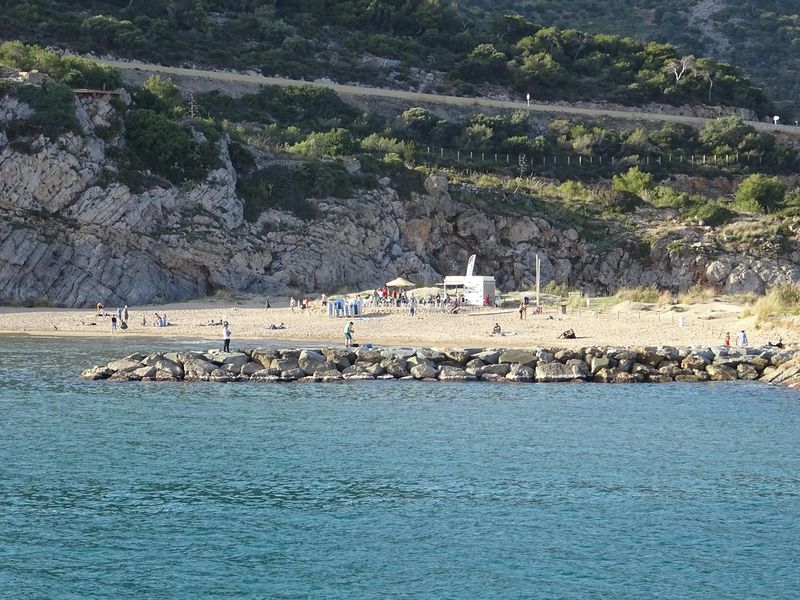
Directly on the promenade is the Platja de la Bassa Rodona, the classic gay beach of Sitges and a central meeting place during the day. A little further out, after a walk along the coast, you will reach the naturist Playa del Muerto. It is more secluded and quiet. Both beaches can be easily combined with a stroll along the waterfront. Early in the day, it is much more relaxed in the summer months, before the beach sections fill up.
Best time to visit
The main season lasts from May to September, when the weather and water temperatures are suitable for beach days. Two dates stand out: the Gay Pride in June and the exuberant Carnaval in February, which attracts many visitors despite the cooler season. In midsummer, the city is full and prices go up, but the scene is at its liveliest. If you like it quieter, travel in late spring or early autumn.
Arrival
Sitges is easy to reach from Barcelona, which also makes the city popular as a day trip or extension of a city trip. From Barcelona-El Prat Airport and from the city centre, regional trains of the Rodalies run regularly to Sitges. If you come by car, follow the coastal road, but parking spaces are scarce in the season. Within the city, you hardly need any means of transport because the old town, bars and beaches are close to each other.
Safety & LGBT Rights
Spain is among the most progressive countries for LGBT rights: same-sex marriage has been possible since 2005, and discrimination on the basis of sexual orientation is prohibited by law. In Sitges, visible queer life has long been part of everyday life, holding hands or kissing in public is hardly noticeable. The usual precautions against pickpocketing in tourist areas still apply. Overall, the place is one of the most relaxed and safe destinations for queer guests on the Mediterranean.
What you cannot miss
LGBT Hotels in Sitges



Neighborhoods in Sitges
Safety & legal situation
- ✓ Homosexuality legal
- ✓ Marriage equality
- ✓ Civil partnership
- ✓ Anti-discrimination protection
- ✓ Legal gender recognition (trans*)
- ✓ Conversion therapy ban
Last reviewed: 25. June 2026
Hotels around Sitges
Tap the map for prices and availability.
Frequently asked questions about Gay Sitges
- Flight time
- ca. 2 h ab Frankfurt (ab Barcelona)
- Best time to visit
- May – Sep
- Languages
- ES / CA / EN
- Visa
- Not necessary (EU/Schengen)
Best time to visit · year overview
Recommended: May – SepClimate normals (avg. of recent years) · data source: Open-Meteo. Temperatures in °C, precipitation per month in mm.
You might also like

Barcelona
36 km away
Ibiza
260 km away

Valencia
268 km away

Madrid
468 km away

Torremolinos
746 km away

Gran Canaria
2.179 km away
Last reviewed: 27. July 2026