
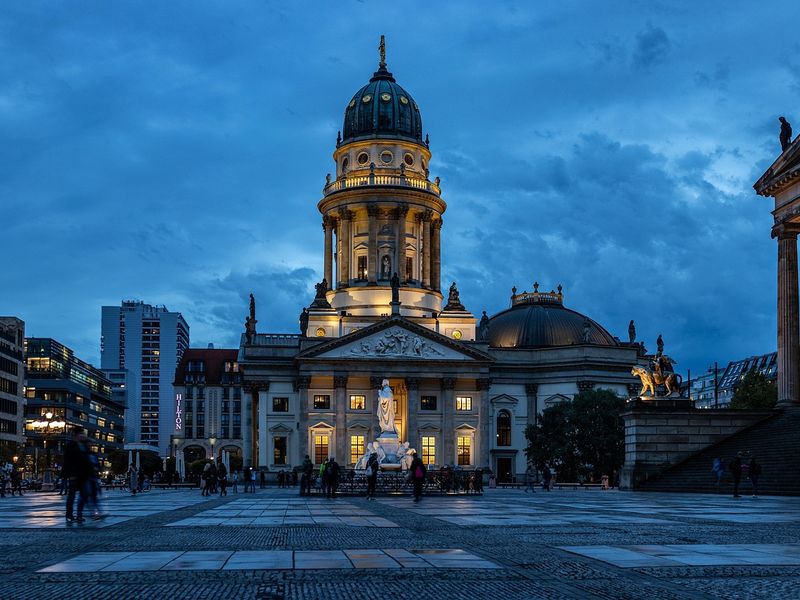
Berlin
Berlin is one of the largest and most open queer communities in Europe. For decades, the city has attracted people from all over the world, many of whom stay and make it their adopted home. If you come here, you won't find a single scene, but several worlds that exist side by side depending on the neighborhood, time of day and preference. The city is also still cheap compared to other metropolises.
Trendy district
In Schöneberg around Nollendorfplatz, the historic heart of the gay scene beats. Bars, cafés and bookstores have survived there for decades, and a memorial stone at the subway station commemorates the homosexuals persecuted under National Socialism. Kreuzberg and Neukölln are younger and more alternative, where queer-feminist collectives, mixed bars and Spätis dominate the picture. With the subway, both poles are well connected and can be combined in one evening. During the day, the Gay Museum and relaxing hours in the Tiergarten are also worthwhile.
Nightlife
Berlin is world-famous for its club culture. The spectrum ranges from large techno temples to queer party series to small neighborhood bars, and many things run without curfew until well into the next day. While some clubs rely on strict door policies and discretion, others are emphatically low-threshold and neighborly. If you want to understand Berlin's nightlife, you should plan for the fact that the night here often doesn't start until after midnight. In addition, there is a dense network of bars and Spätis, where the evening can also end quietly.
Best time to visit
From May to September, the city is at its best, when beer gardens, parks and street life are the most rewarding. The highlight is Christopher Street Day in midsummer, which brings hundreds of thousands onto the streets every year. If you want to be there, you should book accommodation for these days early, because the city is then well occupied. The winter is long and grey, but flights and accommodation are cheaper and the clubs play all year round anyway. It becomes quieter and mild in late spring and early autumn.
Arrival
Southeast of the city is Berlin Brandenburg Airport (BER), which is directly connected to the city center by regional and S-Bahn. From German-speaking countries, you can easily take the ICE to the main train station, from where you can continue in all directions. You don't need a car within the city: S-Bahn and U-Bahn, tram and bus cover almost every corner and run around the clock on weekends. With day tickets and short distances, exploring is uncomplicated, and much of the city centre can be done on foot or by rental bike anyway.
Safety & LGBT Rights
Germany is one of the legally progressive countries: same-sex marriage, adoption law and protection against discrimination are enshrined in law. In Berlin, you move comparatively freely and safely, holding hands and queer life are part of everyday life. As in any big city, there are individual corners and nights when a little attention doesn't hurt, especially away from the well-known trendy districts. The bottom line is that the city is one of the most relaxed destinations in Europe for queer guests, which makes many visitors come back after their first stay.
What you cannot miss
LGBT Hotels in Berlin



Neighborhoods in Berlin
Safety & legal situation
- ✓ Homosexuality legal
- ✓ Marriage equality
- ✓ Civil partnership
- ✓ Anti-discrimination protection
- ✓ Legal gender recognition (trans*)
- ✓ Conversion therapy ban
Last reviewed: 25. June 2026
Hotels around Berlin
Tap the map for prices and availability.
Frequently asked questions about Gay Berlin
- Flight time
- Inland, kein Flug ab Frankfurt nötig
- Best time to visit
- May – September
- Languages
- DE / EN
- Visa
- No formalities for German citizens – domestic.
Best time to visit · year overview
Recommended: May – SeptemberClimate normals (avg. of recent years) · data source: Open-Meteo. Temperatures in °C, precipitation per month in mm.
You might also like

Last reviewed: 29. July 2026