
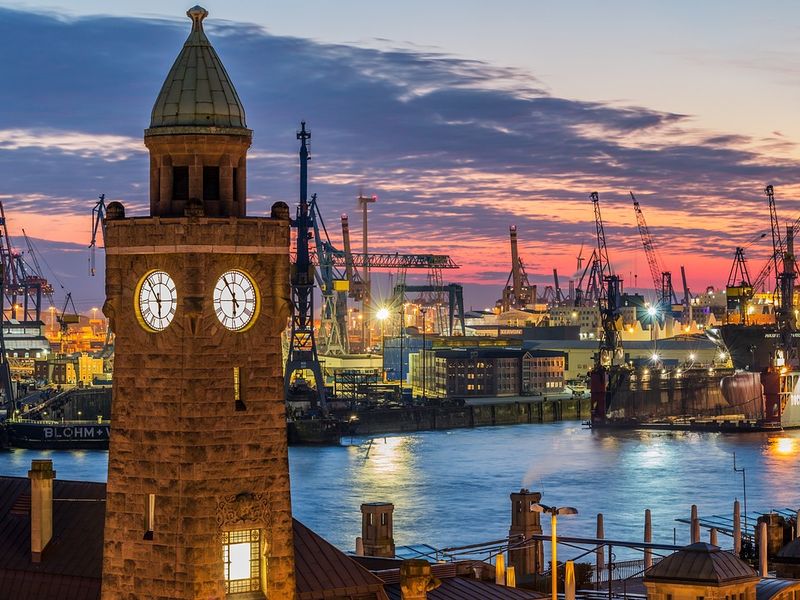
Hamburg
Hamburg is cosmopolitan and maritime, and with good reason it counts as one of the liveliest queer cities in Germany. The Hanseatic city wears its tolerance with confidence, and first-time visitors find their way around quickly. If you're looking for the scene, you'll almost inevitably end up in St. Georg, around Lange Reihe.
Gay scene
St. Georg is the undisputed center of queer Hamburg, and Lange Reihe is its main axis. Rainbow flags line the street, along with cafés, small owner-run boutiques and bars. During the day the neighborhood is pleasantly relaxed. In the evening the bars and the sidewalks in front of them fill up, and the crowd is mixed, from young people to regulars who have been coming for decades. The main train station and the Binnenalster lake are each just a few minutes' walk away, which makes St. Georg a practical base for exploring the whole city.
Nightlife
In St. Georg you'll find Tom's Saloon, the city's oldest gay bar, open since 1974 and named after Tom of Finland. There are also cruise bars like Contact Mens Bar, which many describe as the scene's cozy living room, and the easygoing PickUp Bar near the main station. For a bigger night out, many people head to St. Pauli, where queer parties take place regularly between the Reeperbahn and Klubhaus St. Pauli. The two areas complement each other well: one has a neighborhood feel, the other is loud and goes on until morning. A classic evening often starts with a drink on Lange Reihe and ends hours later in St. Pauli.
When to go
Hamburg is at its best between May and September, when life moves outdoors along the Alster and the harbor. A highlight of its own is Hamburg Pride Week in late July, followed by the big Pride march in early August. The Elbphilharmonie is lit up in rainbow colors, and almost a hundred groups parade through the city center. Late spring and September are quieter, the city is less crowded and the weather is often still mild.
Getting there
Flights from London take about an hour and a half, and from New York about nine hours. From Hamburg Airport, the S1 suburban train gets you to the center in around 25 minutes. Hamburg's main station sits right on the edge of St. Georg and is well connected by long-distance trains. Within the city, the U-Bahn, S-Bahn and HVV buses get you around easily, and much of the Lange Reihe area is best explored on foot anyway. UK and US citizens need no visa for stays of up to 90 days in any 180-day period under the Schengen rules, though passports are now registered in the EU Entry/Exit System (EES); check the current entry requirements before you travel.
Safety and LGBTQ+ rights
Germany is one of the countries with extensive rights for queer people. Same-sex marriage has been possible since 2017, and discrimination based on sexual orientation is prohibited by law. Overall, Hamburg is considered a safe and open destination. Holding hands in St. Georg and on the Reeperbahn is no big deal. As in any big city, keep the usual eye on your valuables at night around the main station and in the entertainment district.
What you cannot miss
Neighbourhoods in Hamburg
Safety & legal situation
Hotels around Hamburg
Tap the map for prices and availability.
Best time to visit · year overview
Frequently asked questions about Gay Hamburg
- Flight time
- about 1.5 h from London, 9 h from New York
- Best time to visit
- May – Sep
- Languages
- DE / EN
- Visa
- No visa for UK or US citizens for up to 90 days in any 180 (Schengen); passports are registered in the EU Entry/Exit System (EES), ETIAS is not yet required.
You might also like


Last reviewed: October 30, 2026