
Bogotá
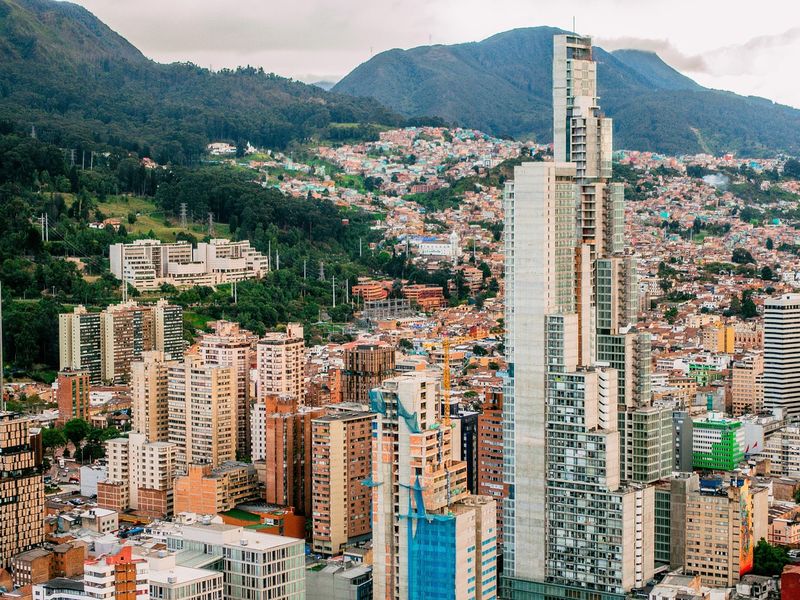
Bogotá is Colombia's capital and is located at around 2,640 meters in the Andes. With several million inhabitants, the city is one of the largest metropolises in Latin America and has developed into a self-confident queer destination in recent years. From the cool climate to the sometimes short-breathed first walk, the altitude characterizes almost everything. If you stay for a few days, you will quickly get used to the pace between the colonial old town, the Andean panorama and a surprisingly dense nightlife scene.
Trendy district
The center of the queer scene is Chapinero, affectionately called "Chapigay" by many. More than a hundred bars, clubs and cafés are concentrated here in a small area, as well as bookstores, hairdressers and small restaurants with a clearly queer clientele. The adjacent Zona G and Zona Rosa are a little more elegant, where more relaxed eateries and good cuisine set the tone. During the day, the district can be easily explored on foot. In the evenings, it fills up, especially on weekends.
Nightlife
In the heart of Chapinero, Theatron is the most famous destination for the night, often referred to as the largest gay club in Latin America. Spread over 20 rooms, each has its own music and atmosphere, from pop and reggaetón to electro, plus drag shows on weekends. Around Calle 60 and Carrera 13 there are smaller bars lined up, where you can start the evening more quietly. The start here is late. Many clubs don't really fill up until after midnight.
Best time to visit
Due to the altitude, the climate remains spring-like cool all year round, with daytime temperatures usually around 18 to 20 degrees and noticeably cold evenings. There is hardly a classic high season, rather drier and wetter phases. Between December and March you travel the sunniest and with the least precipitation. A highlight in the annual calendar is the Bogotá Pride at the end of June, whose march moves from the Parque Nacional via Carrera Séptima to the Plaza de Bolívar.
Arrival
El Dorado (BOG), one of the continent's most important hubs, serves as an international airport. There are usually no direct flights from German-speaking countries; common are transfers via Madrid, Amsterdam, Bogotá's neighboring countries or US cities, for example. Depending on traffic, it takes 30 to 60 minutes from the airport to the center, the easiest way is by official taxi or app service. Within the city, the TransMilenio rapid bus system connects the most important axes. For short distances in Chapinero, your own feet are often enough.
Safety & LGBT Rights
In terms of the legal framework, Colombia is one of the more progressive countries in the region: marriage for same-sex couples has been possible since 2016, and protection against discrimination exists. In everyday life, you will meet you in Bogotá, especially in Chapinero and the central districts, open and warm. As in any big city, caution still applies: stick to busy, well-lit areas, take care of your valuables and use a taxi in the evening instead of long walks through unfamiliar neighborhoods. Outside the liberal inner city districts, a little restraint is worthwhile, otherwise the city is pleasingly open-minded.
What you cannot miss
LGBT Hotels in Bogotá



Neighborhoods in Bogotá
Hotels around Bogotá
Tap the map for prices and availability.
Frequently asked questions about Gay Bogotá
- Flight time
- ca. 11,5 h ab Frankfurt
- Best time to visit
- Dec – Mar
- Languages
- ES / EN
- Visa
- Not necessary (tourist, up to 90 days)
You might also like
Last reviewed: 27. July 2026