Sehenswürdigkeiten in Buenos Aires
The key addresses in Buenos Aires — verified and regularly updated. Clicking takes you straight to the location page.
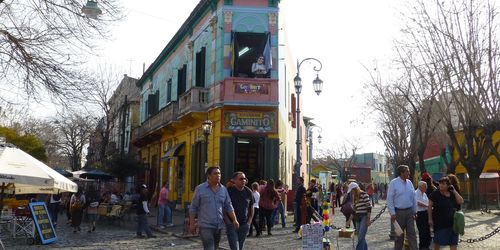
Caminito (La Boca)
Probably the most colorful alley in South America: In the harbor district of La Boca, the houses shine in bright colors, tango dancers spin on the street and artists sell their works. Lively, photogenic and full of Buenos Aires folklore – a must-see during the day.
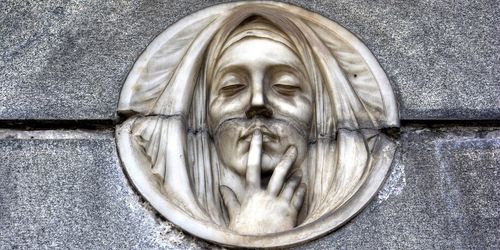
Cementerio de la Recoleta
Argentina's most famous cemetery is a city of the dead made up of around 4,800 magnificent mausoleums over four blocks. Between marble funerary chapels and tree-lined alleys lies the tomb of Eva "Evita" Perón – one of the most visited attractions in the city.
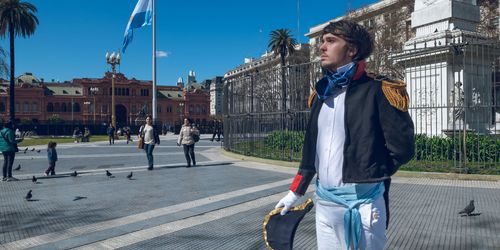
Plaza de Mayo & Casa Rosada
The historical and political center of Argentina: Around the Plaza de Mayo are the pink Casa Rosada (Evita once spoke to the people from the balcony), the cathedral and the town hall. History was made here – still the site of demonstrations and rallies today.
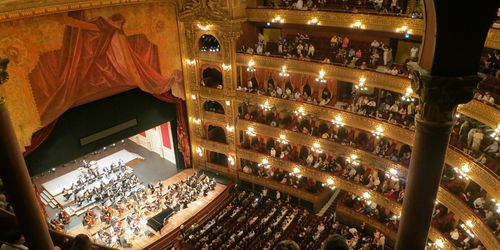
Teatro Colón
One of the most beautiful and acoustically best opera houses in the world, over 100 years old and celebrated by National Geographic. The magnificent architecture with its golden foyer and large hall is impressive – a guided tour or a concert visit is definitely worthwhile.
Schwule Sehenswürdigkeiten in Buenos Aires verbinden sich gut mit der queeren Geschichte Argentiniens, das 2010 als erstes Land Lateinamerikas die gleichgeschlechtliche Ehe einführte. Bis heute prägt dieser frühe rechtliche Schritt das offene Klima der Stadt. Der queere Höhepunkt des Jahres ist die Marcha del Orgullo, die jeden November stattfindet und von der Plaza de Mayo am Kongressgebäude vorbei durch das Zentrum zieht. Sie zählt zu den größten Pride-Veranstaltungen Lateinamerikas und versammelt Hunderttausende Teilnehmer.
Das Herz des queeren Lebens schlägt in Palermo, dem Viertel, das seit den 1990er Jahren zur Szenegegend wurde und sich heute mit Bars, Cafés und Parks gut zu Fuß erkunden lässt. Über die Szene hinaus bietet Buenos Aires die klassischen Stationen, die sich mit einem queeren Stadtbummel verbinden lassen: die Plaza de Mayo mit dem Regierungspalast Casa Rosada, das elegante Recoleta mit seinem berühmten Friedhof und die Tangokultur in San Telmo. Auch der Tango hat queere Spielarten, etwa beim Tango Queer, bei dem die festen Rollen aufgebrochen werden. Wer Buenos Aires über die reinen Postkartenmotive hinaus kennenlernen will, findet im offenen Stadtleben und in der Szene rund um Palermo einen eigenen Zugang. Zu den wichtigsten Stationen führen dich die folgenden Orte und Anlässe.