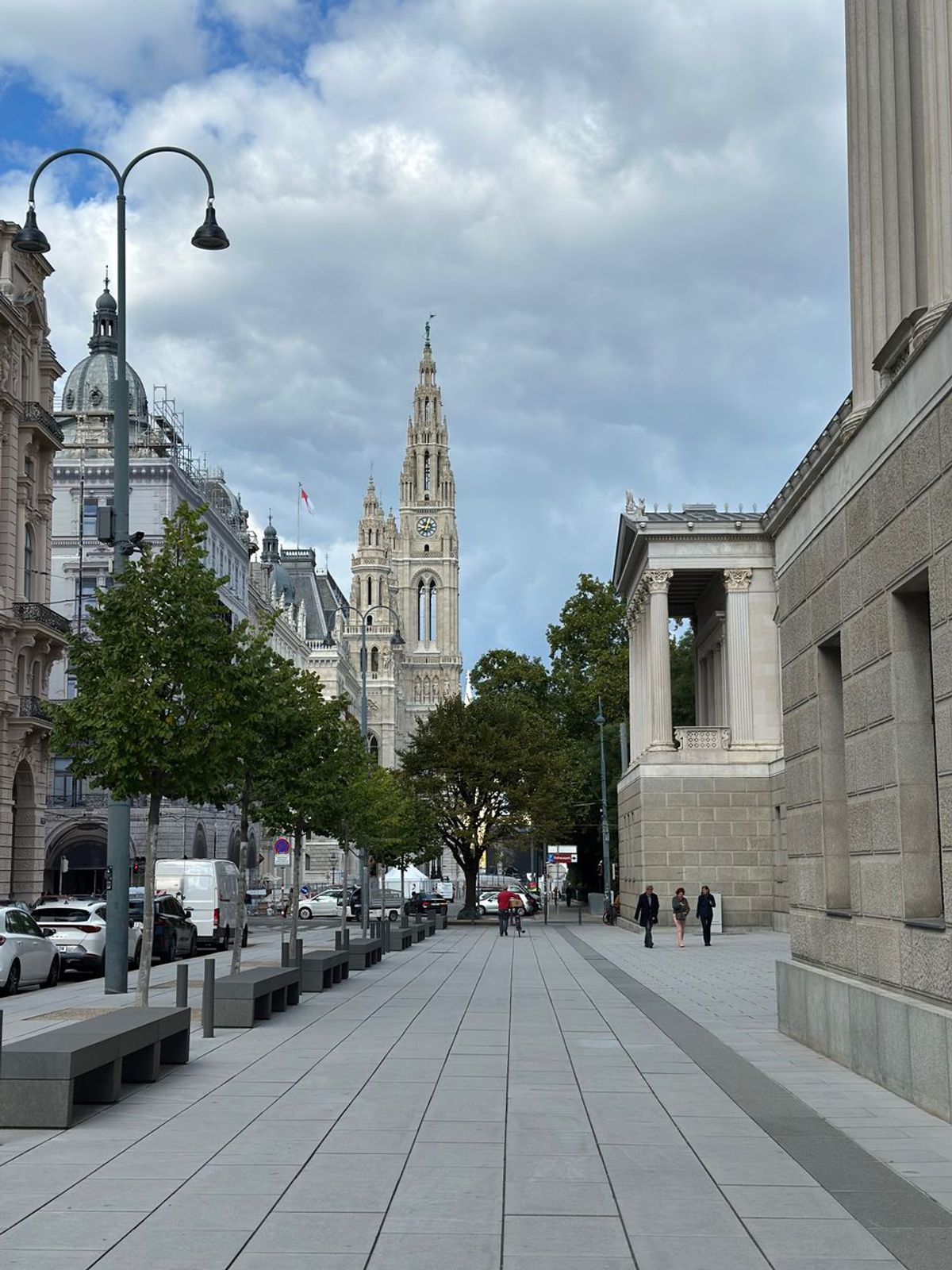
Vienna's queer scene is small enough to explore on foot over a long weekend. It is not as big as Berlin's or Amsterdam's, but it is compact: most of it sits in two districts, the distances are short, and between stops you will pass coffeehouses, museums and the Naschmarkt. This guide splits the city into three days. Opening hours and programmes change, so check each venue's own site before you go.
Where the scene is
According to the Vienna Tourist Board, LGBTIQ+ life centres on the Naschmarkt, in the 5th and 6th districts. Bars such as Village, Felixx, Mango Bar and The Hive are here. If you book a hotel in this area, you can walk home at night. The old town with the Opera, the Albertina and the Ringstrasse is a short walk or U-Bahn ride away.
Day 1: history and a coffeehouse
Start with history, because it explains the city. Homosexuality has not been a crime in Austria since 1971. Before that, criminal law punished same-sex acts, and under the Nazis men were persecuted for it and sent to concentration camps. Vienna remembers them with a monument in the Resselpark and with the Heinz-Heger-Park, named after the pseudonym Josef Kohout used when he wrote about his imprisonment in a camp.
The present begins at the Rosa Lila Villa on the Linke Wienzeile. Activists occupied the empty building in 1982 and turned it into a hub of the scene. Today it houses a residential project, a counselling service and the Café Villa Vida, an open meeting place. If you need advice or just want to say hello, you are welcome.
In the afternoon, head to Café Savoy in the 6th district. It is a historic coffeehouse that the tourist board lists as a stop on its queer walking route. Order a melange and stay as long as you like. Nobody will hurry you.
Day 2: museums, archive and a bookshop
The second day belongs to the museums. The Albertina shows one of the world's major graphic art collections, and the Belvedere shows Klimt and his contemporaries. Both appear in the LGBTIQ+ walk in the tourist board's ivie app, which is available in German and English.
For queer history in the narrower sense there is Qwien, the centre for queer culture and history (qwien.at). Since 2025 it has had a new home in the 5th district. Look at the programme beforehand, because not every tour or exhibition runs all the time.
The Löwenherz bookshop is on the ivie route too and is a classic of the scene. Women and trans people can try Café Flinte in the 8th district, which a lesbian team runs and which explicitly welcomes trans people.
Day 3: bathing and going out
The Kaiserbründl is considered Vienna's best-known gay sauna, and its historic pool with columns is worth a look even for the architecture. If saunas are not your thing, the Naschmarkt is the alternative: market stalls, cafés and restaurants stand close together, and the scene's bars are a few steps away.
In the evening you have a choice. Why Not is described as the city's oldest gay club, and Village is the classic bar to start the night. Women will find the club g.spot in the tourist board's recommendations. As elsewhere, the scene is busiest at weekends, and during the week some venues open late or stay closed.
When to go
In June, the Regenbogenparade (Rainbow Parade) moves along the Ringstrasse. It is the high point of Vienna's Pride weeks and has taken place every year since 1996. The city is at its fullest and most colourful then, so book your hotel and train early. If you prefer quiet coffeehouse days, go outside the summer, when hotels are cheaper and venues are less crowded.
Safety and the law
Austria is an easy country for queer visitors. Since 2019, same-sex couples can marry there (as of October 2026). Holding hands in the city centre and in the scene is not a problem. As in any big city, evenings around stations and nightlife areas can bring harassment. If something happens, contact the police (emergency number 133) or the counselling services at the Rosa Lila Villa.
Getting there and around
From Germany you can reach Vienna by train, long-distance bus or plane. Inside the city, public transport is dense, and for most stops in this guide you will not need a taxi. A weekly pass or a 72-hour ticket pays off over three days.
One last tip: the scene is small enough that people get to know each other fast. Ask at the bar if you want recommendations. People who live in Vienna usually know the current parties better than any list. For dates, use the venues' own pages and the scene's event calendars.
Frequently asked questions
Sources
- en.wikipedia.org · LGBTQ_culture_in_Vienna
- wien.info · lgbt-guide-for-ivie-425416
- vienna.at · 4305736
Last reviewed: 23. October 2026