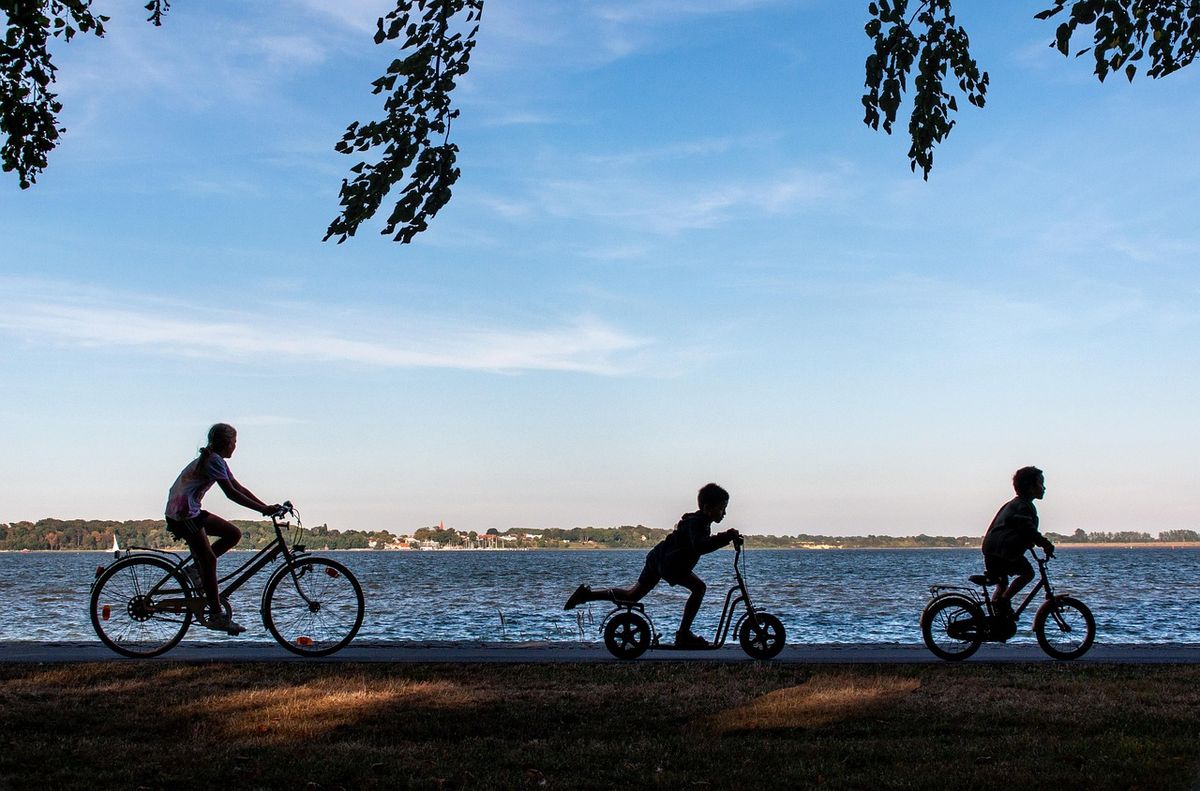
Image: (pixabay)
From consent letters to picking somewhere everyone feels at ease: a practical guide to travelling as a rainbow family, with paperwork tips and family-friendly, queer-friendly destinations.
Travelling with children is its own kind of adventure: lots of anticipation, packed suitcases and plenty of wide-eyed wonder. For rainbow families, a few extra things come into play, such as documents or the choice of destination. None of it is complicated once you've thought it through. This guide covers what actually matters, from paperwork to picking somewhere everyone feels at ease.
Documents and legal safeguards
A practical question for many rainbow families is how to prove parenthood while travelling. Depending on your family set-up and where you're headed, it can make sense to carry documents that establish your relationship to your child. That's not about expecting trouble. It's about having an answer ready if anyone asks at a border check, or in a medical emergency where staff want to confirm who can make decisions for the child.
- Carry birth certificates, custody documents or adoption papers if you have them, ideally as originals and copies.
- If one parent is travelling alone with the child, a written consent letter from the other parent is widely expected. Many countries, including Canada, Mexico and several EU states, ask for one when a minor crosses the border without both parents, and a notarised letter carries more weight.
- Check in advance which documents are typically expected at your destination and for the border crossings on your route.
- Keep important papers digitally as well, so you can pull them up quickly if you need them.
This prep can feel like a lot of fuss, but it buys real peace of mind on the road. Requirements vary considerably from one situation to the next, so for specific legal questions it's worth getting individual advice rather than relying on a forum thread. Our overview of how same-sex marriage and partnership are recognised worldwide is a useful starting point for understanding where your family status is acknowledged on paper.
Finding family-friendly and queer-friendly destinations
The ideal destination for a rainbow family does two things at once: it works for children and it's relaxed about diverse family forms. You'll most often find both together in places with a visible, matter-of-fact diversity and solid tourist infrastructure.
A handful of countries have combined legal recognition with genuine everyday acceptance for years. The Netherlands was the first country in the world to open marriage to same-sex couples, back in 2001; Spain followed in 2005 and pairs strong protections with a warm, sociable culture. Canada, Portugal, Belgium and the Nordic countries sit in a similar bracket, with marriage equality, anti-discrimination law and a general sense that two mums or two dads at the breakfast buffet raise no eyebrows. None of that guarantees a perfect trip, but it shifts the odds in your favour.
When you're weighing options, look for a calm overall atmosphere, short distances and amenities aimed at families. Travel reports from other rainbow families are especially useful here, because they show you where you'll genuinely feel welcome rather than merely tolerated. If you'd rather skip the obvious hotspots, our piece on queer-friendly hidden gems beyond the classics points to quieter places that still get the welcome right. For a sense of the wider safety picture, it also helps to know how to read a country's situation correctly before you commit.
Planning travel with children well
Travelling with kids means thinking in different rhythms. Long journeys, packed daily schedules and last-minute changes of plan take their toll on the little ones fast. Build that in and the whole trip runs more smoothly.
- Choose accommodation with space, child-friendly facilities and, ideally, a kitchen for flexible meals. Our notes on spotting genuinely gay-friendly hotels and avoiding pinkwashing help you tell a real welcome from marketing.
- Build in breaks and don't cram the day full of activities.
- Bring familiar things that give your children a sense of security, from a cuddly toy to their usual snack.
- Keep important medical information and the address of your nearest point of contact handy.
The younger the children, the more a calm framework matters. A bit of flexibility turns the trip into a pleasure for everyone. If your route involves flights or several legs, our guide to getting there and around without stress is worth a read before you book.
Handling questions and curiosity
While you're away, you may come across questions about your family. Some are simply curious, some thoughtless, very few ill-intentioned. How you respond is entirely up to you. A calm, self-assured manner takes the tension out of most situations before it builds.
It helps to have a few simple answers ready that you're comfortable with. Talking it through with your children in advance is just as valuable, so they know how they'd like to handle questions too. That way no one feels caught off guard. In queer-friendly regions you'll often find your family form is taken completely for granted, and the topic barely comes up at all.
Activities for the whole family
The best part of a holiday is the time you spend together. Look for activities that work across age groups and offer enough variety. With a good mix of movement, discovery and rest, children and adults both get their money's worth.
- Plan child-friendly outings with short distances and room for breaks.
- Let your children have a say in what you do; it boosts the anticipation.
- Keep some quiet days free too, with nothing at all on the agenda.
That's how you create relaxed days the whole family is happy to look back on. Keep an eye on your documents, plan with the children in mind and pick places where diversity is taken for granted, and what's left is what counts: time together, new discoveries and the small moments that bond you as a family.