Image: (pixabay)
Mild winter temperatures, the Yumbo Centrum and the famous dunes: why Maspalomas on Gran Canaria stays a warm, lively queer destination all year round.
While the days in Central Europe turn short and grey, one island reliably delivers what few European destinations can in midwinter: warmth, sunshine and water that's still inviting for a swim. Gran Canaria, and especially the south around Maspalomas and Playa del Inglés, has been a fixture for queer travellers for decades. Here's why the island works all year, and what to look forward to when you go.
The climate: winter sun by design
Gran Canaria sits off the northwest coast of Africa, on roughly the same latitude as the Sahara, and that geography does most of the work. The subtropical climate keeps the south mild even at the turn of the year. Through December, January and February, daytime highs in Maspalomas hover around 20 to 22°C, with nights rarely dropping below 16°C. The Atlantic stays around 19 to 20°C, cool on entry but perfectly swimmable.
That's the difference that matters. Many Mediterranean resorts shutter for winter; the south of Gran Canaria does not. You don't have to wait for peak summer to get beach days, balmy evenings and an easygoing, open way of life. For a lot of people the island is simply the dependable antidote to the European winter blues. If you're weighing up the calendar, our guide to finding the best time to travel shows how to line up climate, prices and scene season.
The Yumbo Centrum as the queer heart
No spot sums up queer Gran Canaria quite like the Yumbo Centrum in Playa del Inglés. By day the multi-storey shopping centre looks unassuming, almost faded. After dark it becomes the centre of gravity for the whole scene. Bars, cabaret venues and meeting spots are scattered across the floors and terraces, and the mood shifts from a quiet drink to a full dancefloor depending on where you wander.
What makes the Yumbo special is how reliable it is. Whether you travel solo, as a couple or in a group, you'll almost always find connection and an atmosphere where being queer is simply the default. The density of venues in one place is unusual, so bar-hopping happens on foot, across a few minutes rather than across a city. If you like that kind of compact scene, it's worth reading how to go about finding the scene in a new city before your first night out.
The dunes of Maspalomas
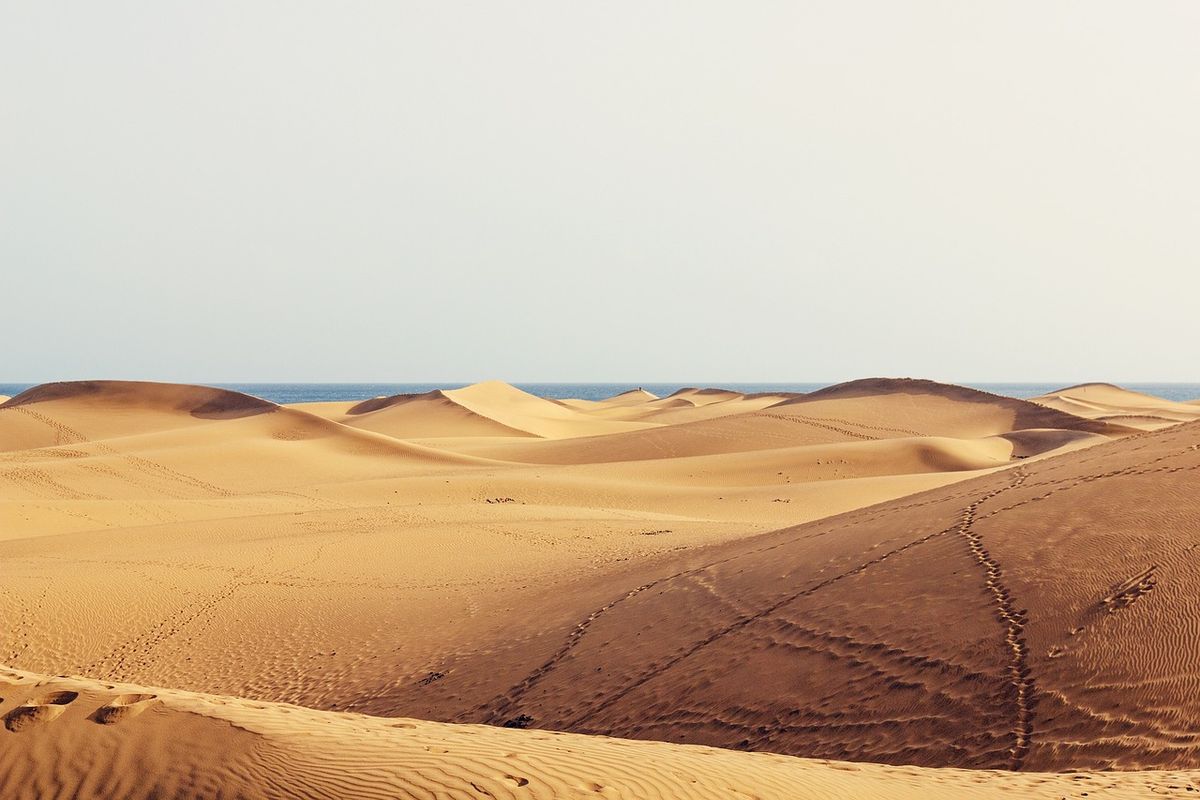
The landmark of the south is the sweeping field of sand dunes at Maspalomas, an almost desert-like landscape that runs right down to the sea. It's a protected Special Nature Reserve of roughly 400 hectares, shaped by the trade winds that nudge the sand a few metres every year. La Charca, the saltwater lagoon at the western edge, is an important stopover for migratory birds travelling between Europe and Africa.
Queer travellers have long gravitated here, finding the quieter stretches of beach beyond the main resort. A walk through the dunes in the soft light of early morning or before sunset is one of those moments people associate with the island. Stay on the marked paths where they're signposted, keep to the designated areas, and treat the reserve gently. It's a living ecosystem, not a backdrop.
A scene that runs all day, not just at night
Queer Gran Canaria isn't confined to the nightlife. The crowd shapes the picture by day too: on the beach, in the cafés and at the well-known meeting spots around Maspalomas and Playa del Inglés. It's international, mixed and represented across every age group, which is part of why the island reads as relaxed rather than cliquey.
- Beach days at the queer stretches near the dunes.
- Unhurried café and bar visits through the afternoon.
- A lively evening programme around the Yumbo Centrum.
- Queer events spread across the year, from Maspalomas Gay Pride in spring to bear and fetish gatherings.
This mix means the island works both for people chasing quiet and for those keen to party, often within the same trip. Want to map out a few days? Our Gay Maspalomas in 3 days itinerary breaks it down hour by hour.
Why winter sun makes particular sense here
Winter sun is more than a pleasant bonus. Anyone wanting to push back against the dark months in Central Europe gets an accessible break here: a mild climate, a flight of around four to five hours from many European cities, and a queer infrastructure that has had decades to settle in. None of that depends on the calendar.
The south is also in high season over winter, which matters more than it sounds. The scene is active, the venues are open, and you don't land somewhere that's gone to sleep. That reliability is what sets Maspalomas apart from destinations that only show their full face in summer. If the idea of celebrating Pride in the cold months appeals, take a look at the wider list of winter Pride destinations.
Practical tips for your stay
- Stay close to the action: if you're after scene life, base yourself within walking distance of the Yumbo. The bungalow complexes around Maspalomas and Playa del Inglés are popular and built for exactly this.
- Separate day and night: plan relaxed beach and dune days, then save the Yumbo for the evening. You'll experience both sides of the island without burning out.
- Explore beyond the south: the mountainous interior and the capital Las Palmas in the north reward a day trip, even though the queer hub is firmly in the south.
- Take sun protection seriously: the winter sun feels milder but is stronger than many expect, this close to the Tropic of Cancer. Cover up and reapply even in the cooler season.
- Respect the reserve: in the dunes the rule is simple. Protect the conserved landscape and be considerate of others sharing it.
If you're still deciding between sun-and-scene islands, our comparison of Mykonos vs. Sitges covers the same trade-offs from a different angle, and the wider gay travel hotspots overview puts Gran Canaria alongside its peers.