Sehenswürdigkeiten in New Orleans
The key addresses in New Orleans — verified and regularly updated. Clicking takes you straight to the location page.
Bourbon Street (Lavender Line)
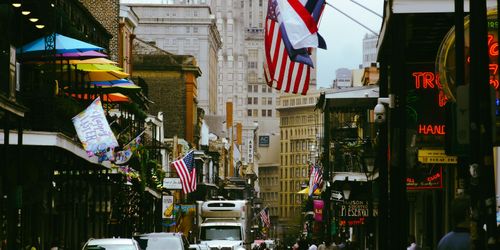
Bourbon Street is the vibrant center of New Orleans' nightlife. At the bottom, beyond St. Ann Street – the so-called Lavender Line – the queer neighborhood begins with bars like the Bourbon Pub & Parade, Oz and Café Lafitte in Exile, the oldest continuously open gay bar in the USA.
Frenchmen Street
Frenchmen Street in the Marigny is considered the authentic counterpart to the touristy Bourbon Street. On a few blocks, one live music bar follows the next - from jazz to funk to brass band. Popular with locals and travelers alike, it's the best place to experience the musical soul of New Orleans.
Garden District
The Garden District is home to magnificent Southern mansions, oak-lined streets, and ornate 19th-century wrought-iron ornamentation. Strolling through the quiet neighborhood feels like a trip to another world — a pleasant contrast to the bustling French Quarter. With the historic St. Charles Streetcar you can get there quickly.
Jackson Square & St. Louis Cathedral
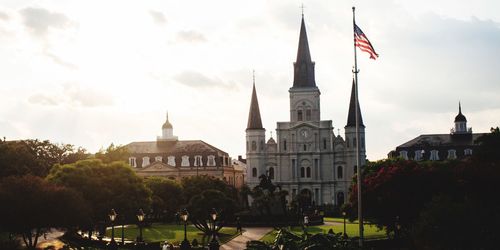
Jackson Square, in the heart of the French Quarter, is one of the city's most picturesque squares. In front of the magnificent St. Louis Cathedral, artists sell their paintings on the wrought-iron fences, street musicians play and the smell of fresh beignets wafts over from the nearby Café du Monde.
Schwule Sehenswürdigkeiten in New Orleans führen tief in die queere Geschichte des amerikanischen Südens. Der wichtigste Erinnerungsort ist die ehemalige Adresse der UpStairs Lounge in der Iberville Street im French Quarter. Bei einem Brandanschlag auf eine schwule Bar starben dort am 24. Juni 1973 32 Menschen. Über Jahrzehnte war es das tödlichste Verbrechen gegen LGBTQ-Menschen in den USA, bis zum Attentat im Pulse-Club in Orlando 2016. Bis heute ist die Tat offiziell ungeklärt, und eine Gedenktafel am Ort erinnert an die Opfer, die damals von Stadt, Kirche und Öffentlichkeit weitgehend ignoriert wurden.
Abseits dieses dunklen Kapitels erzählt vor allem das French Quarter selbst viel über queeres Leben in der Stadt. Schriftsteller wie Tennessee Williams und Truman Capote verkehrten in den Bars der Gegend, und das Café Lafitte in Exile von 1933 steht für eine Kontinuität, die nur wenige US-Städte vorweisen können. Wer sich für die Bewegung interessiert, findet im LGBT+ Archives Project of Louisiana Material zur lokalen Geschichte. Der bekannteste queere Termin ist die Southern Decadence über das Labor-Day-Wochenende Anfang September, oft das schwule Mardi Gras genannt, wenn das Quarter zur Bühne für Kostüme, Paraden und Straßenfeste wird. Die folgenden Orte führen dich zu den wichtigsten Stationen der queeren Stadtgeschichte.